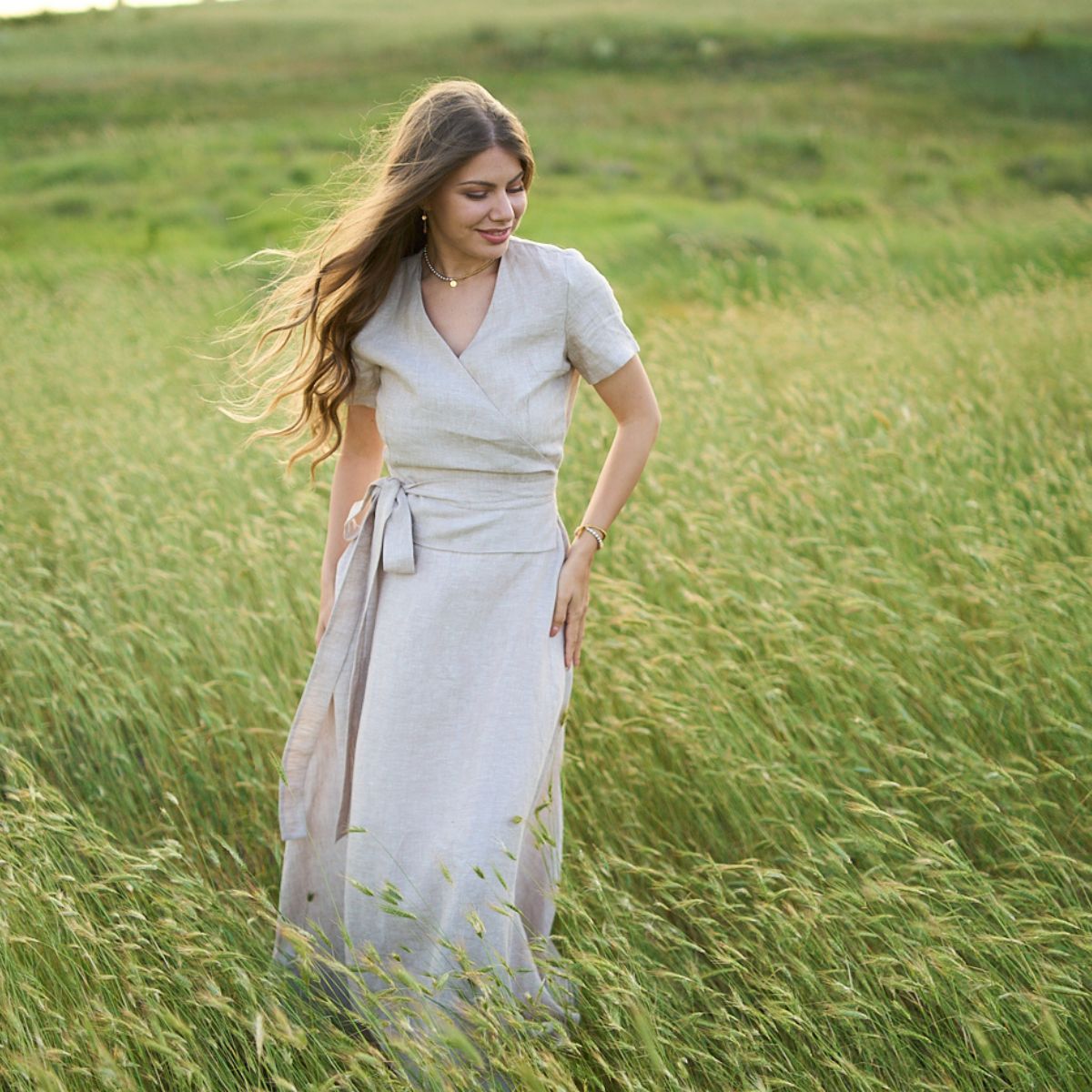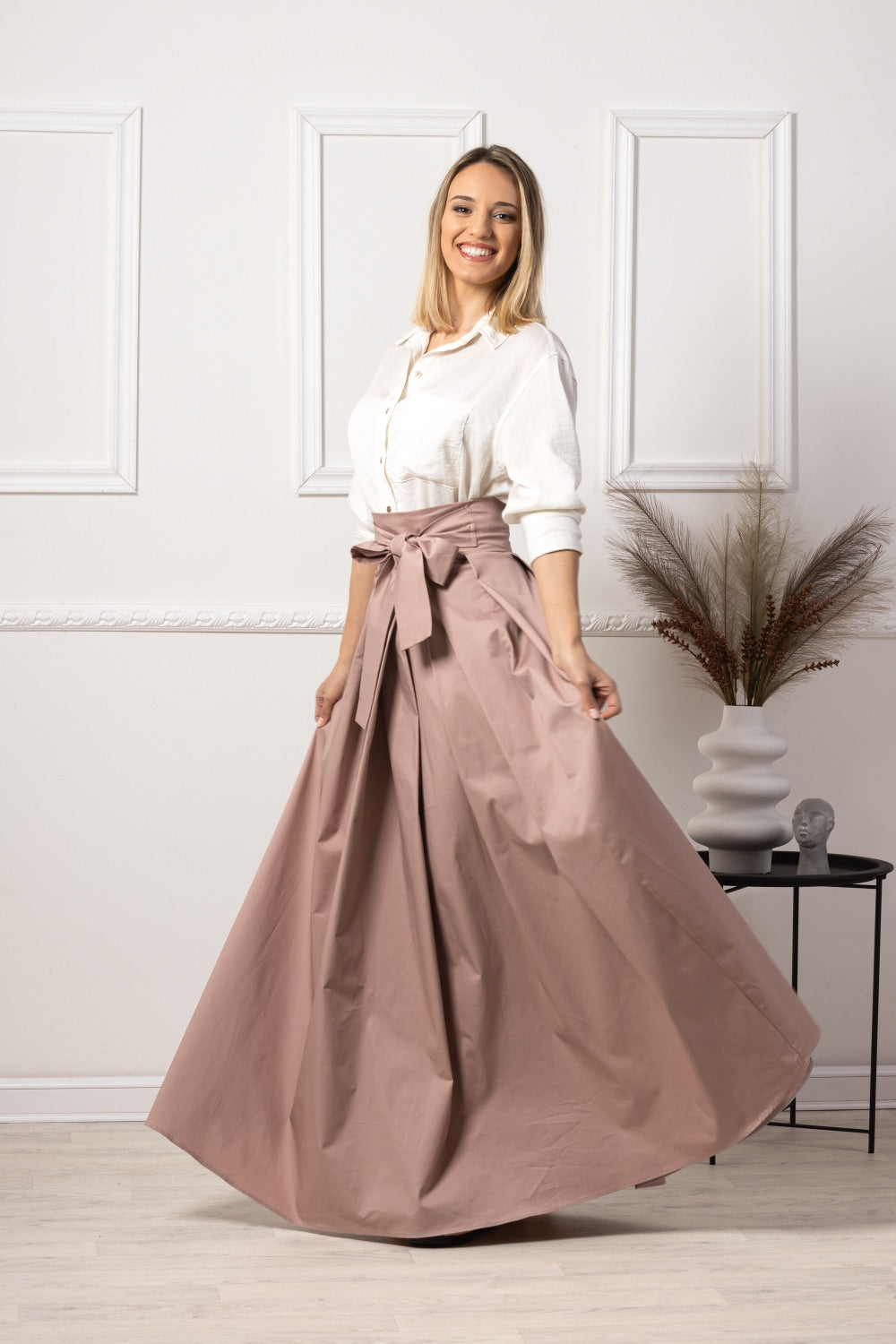

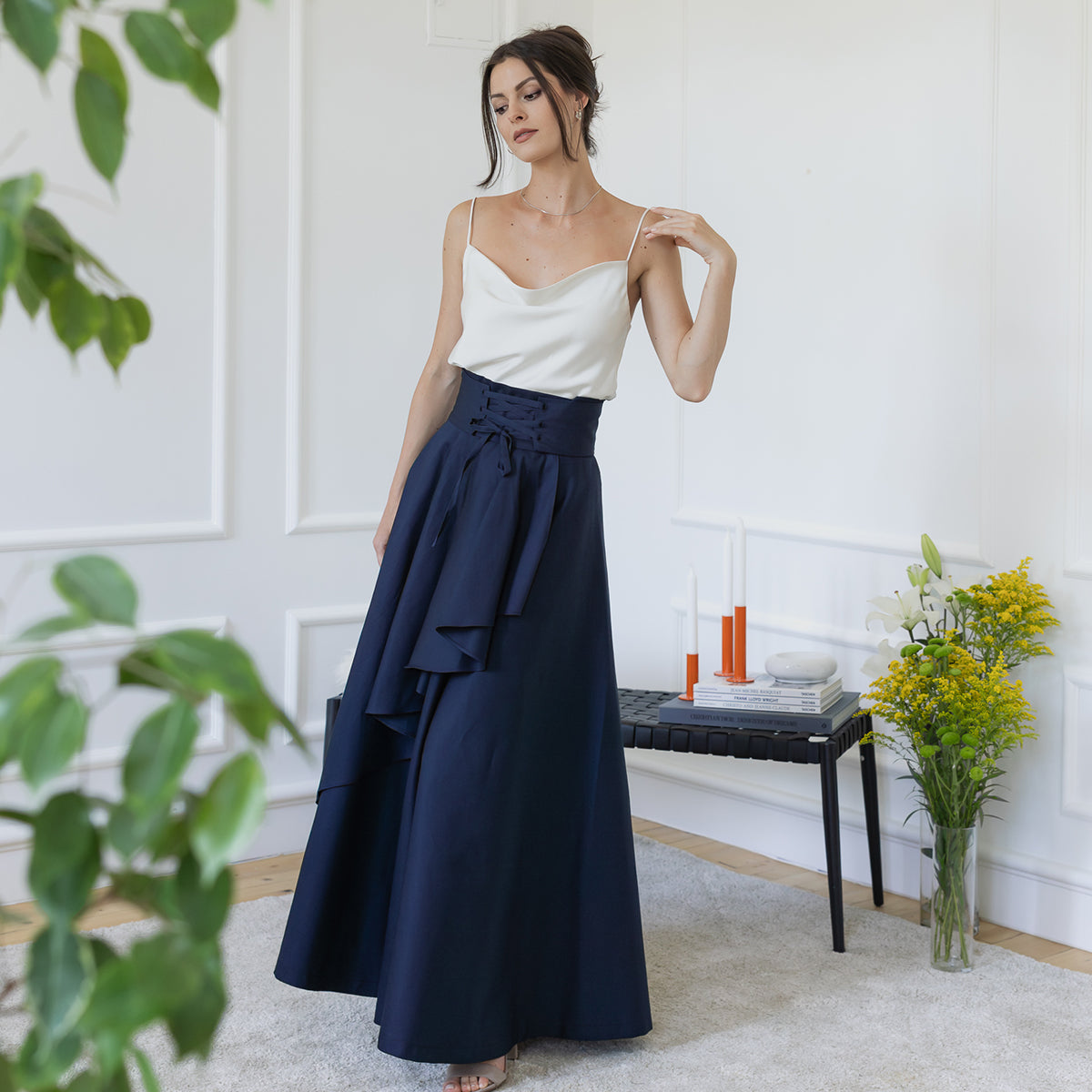
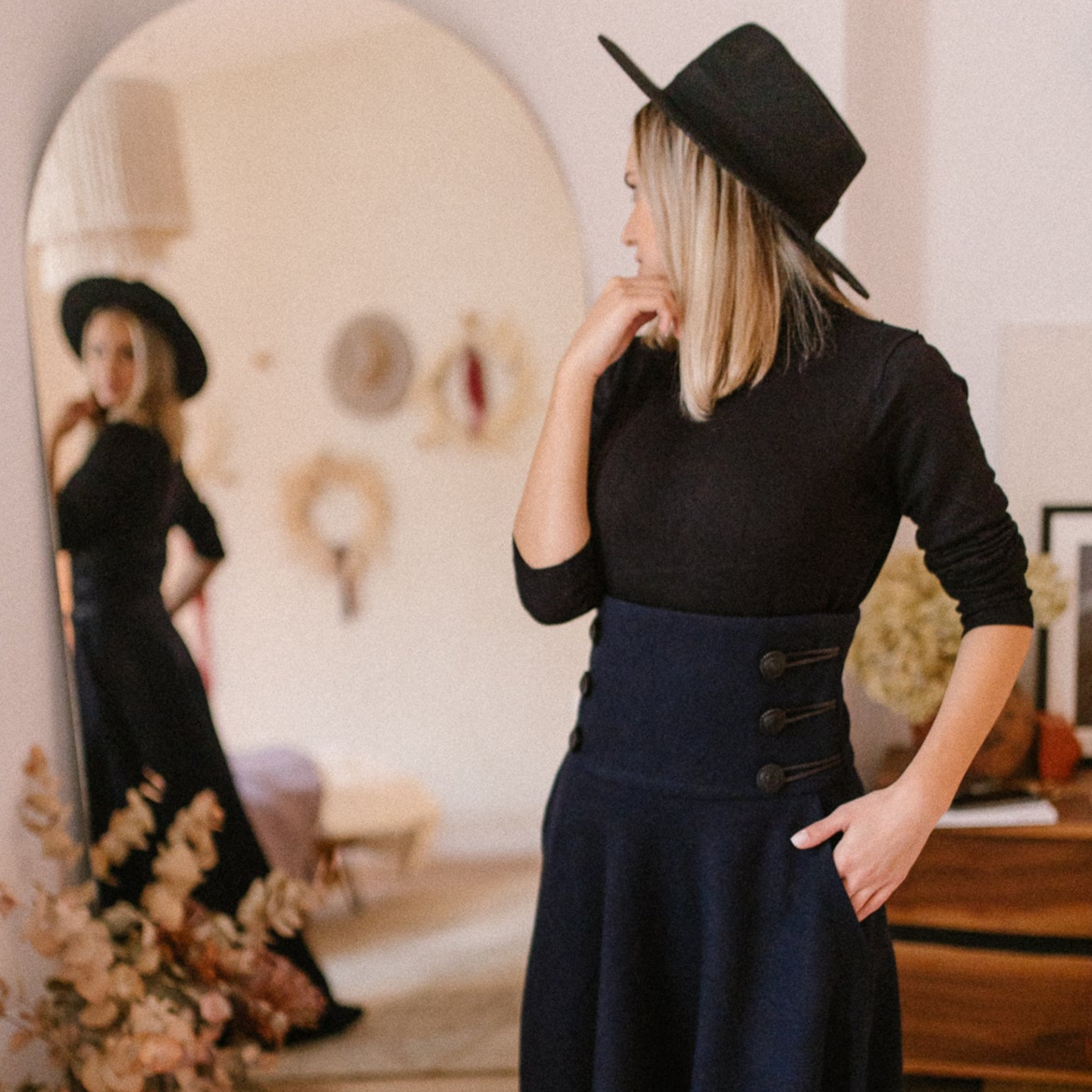


A cotton skirt is the quietest item in a spring wardrobe and, often, the hardest-working. It does not announce itself the way a printed dress does, but it shows up for the wedding, the long lunch, the airport, and the Tuesday in the office, and it gets better with each wash. Below is everything we have learned about choosing, styling, and caring for a handmade cotton skirt, from the women who cut and sew them in our Bulgarian atelier.
Browse the full cotton skirt edit if you'd rather skip the reading and start with the pieces themselves. Otherwise, here is the long version.
Why cotton is the most versatile fabric for spring
Spring in Europe is not one season; it is several. Early April still asks for a layer; late May behaves like summer. Cotton sits exactly where you need it for that range, warmer than linen first thing in the morning, cooler than wool by lunchtime, more forgiving than silk when you sit down on a stone bench. It also holds dye beautifully, which is why our spring color stories live in cotton and our autumn color stories live in wool.
There is a practical advantage that fast-fashion cotton skirts rarely capture. When a cotton skirt is cut on the grain by hand and sewn with a reinforced waistband, it keeps its shape through years of wear. The skirt drapes flat at the waist rather than rolling, the side seams stay straight rather than spiraling, the hem hangs even rather than dipping. These are not trend features. They are the reasons the same skirt can move from March 2026 into March 2031 still looking like a skirt.
What is a cotton skirt and why does it work in spring?
A cotton skirt is a skirt cut from woven cotton fabric, typically poplin or a midweight cotton, that holds shape, breathes in warm weather, and softens with each wash. It works for spring because it transitions from cool April mornings to warm June afternoons without the wrinkling penalty of linen or the heat of wool, and because cotton accepts saturated color in a way few other natural fibers do.
There is no single weight that defines a cotton skirt. Ours range from a lighter midweight cotton suited to a midi bow skirt, up to a denser cotton more appropriate for a structured A-line maxi. The weight is what determines the drape, and the drape is what determines whether a skirt reads as polished or casual, regardless of the color or the silhouette.
The four cotton silhouettes we make
Spring rewards specificity. Rather than describe one universal cotton skirt, here are the four silhouettes we actually cut and sew, each meant for a different body and a different week.
Empire high-waist


A quick reference, because the four silhouettes do different things:
-
Empire: most flattering across body types, best for everyday and travel
-
Pleated maxi: most architectural, best for work and dinners
-
Midi with bow: softest and most casual, best for weekend and warmer days
- A-line floor-length: most formal, best for weddings and events
Cotton skirt colors and how to choose yours
We make cotton skirts in a deliberate palette: black, dark blue, dusty rose, deep yellow, red, sage green, slate blue, purple, teal blue, and turquoise. We do not make every skirt in every color (the pleated maxi has a fuller palette than the A-line, for example) but the color story is consistent across silhouettes, so a head-to-toe outfit in two of our cotton pieces will always agree.
A short framework for choosing your first color:
- Cool undertones (pink, blue, or rosy skin) look most balanced in slate blue, dusty rose, dark blue, and the deeper teal blue. Avoid mustard-leaning yellow unless paired with a cool top.
- Warm undertones (yellow, peach, or olive skin) carry mustard yellow, red, deep yellow, and purple unusually well. The purple cotton maxi skirt is the most-bought of the new A-line range for exactly this reason; it reads jewel-toned next to warm skin.
- Neutral undertones can wear any of the above; start with whichever color you already wear most often in tops.
If you want a single color that does the most work, choose dark blue. It sits next to almost everything in a quiet-luxury wardrobe (white, cream, sand, grey, black) and does not look like a uniform.
If you want one piece that earns its keep at events, the Dusty Rose High Waist Pleated Maxi Skirt is our bestseller for a reason; it photographs as soft pink in low light and as a richer blush in sun.
And if you want a statement piece that still reads tasteful, the Maxi Floor Length A-Line Skirt with Ultra High Waist in Mustard Color holds its own at a garden party without tipping into costume.
How do you style a cotton skirt for work, weekends, and travel?
A handmade cotton skirt is, in our customers' wardrobes, almost always the anchor of an outfit rather than the accent. The styling rules that follow are how to keep it that way.
For work. Tuck a silk or fine-cotton blouse into the waistband. Avoid a knit, because knits add bulk where the waistband is doing precise work. Choose a low loafer or a closed pump in a neutral leather. A blazer goes over the top if the office is more formal; a fine-knit cardigan if it is not.
For weekends. The proportion that works best is something fitted at the top half (a tucked tee, a ribbed tank, a slim sweater) paired with the skirt's volume below. Add a raffia or canvas bag, a flat sandal, and you have a coffee-and-market outfit without thinking about it.
For travel. Cotton skirts pack better than linen because they wrinkle less and unwrinkled faster. Roll, do not fold, and hang the skirt in a steamy bathroom for ten minutes on arrival. Pair with a cotton tee and a clean white sneaker; pair with a tucked silk top and a sandal for the same skirt at dinner.
For an event. This is where the A-line floor-length silhouette comes into its own. Tuck in a tailored shell, add a heeled mule, and the cotton reads occasion rather than casual. We have a separate guide on what to wear as a wedding guest if you are working backwards from a specific invite.
Caring for a handmade cotton skirt
Cotton is the most forgiving of our four core fabrics, but a handmade cotton skirt rewards a small amount of care.
- Wash cold, inside out, on a gentle cycle. Hot water and aggressive cycles set wrinkles deeper into the pleats and can fade saturated colors like the deep yellow and red over many washes.
- Skip the tumble dryer. Hang to dry on a wide hanger or lay flat. The skirt holds its shape on the hanger and avoids the mechanical wear of a dryer drum.
- Iron from the inside, while slightly damp. Cotton presses beautifully when there's still moisture in the fiber. A dry iron on a fully dry skirt creates shine; a steam iron on a damp skirt smooths invisibly.
- Store hung, not folded. Cotton creases at fold lines over time. A wide wooden or fabric-covered hanger is enough; no need for a specialty skirt hanger.
- Spot-clean small marks with cool water and a clean white cloth before resorting to a full wash. Most spring stains lift this way.
Care matters more for cotton than people assume. Not because the fabric is delicate, but because a well-cared-for cotton skirt is the difference between a piece that lasts three seasons and one that lasts ten. We treat our skirts as long pieces of work; we hope you will too. A broader overview of caring for natural fibers lives on the OEKO-TEX site if you want to read further on what fabric certifications actually mean.
Sizing and fit notes
Frequently asked questions
Are cotton skirts good for hot weather?
Cotton breathes well and absorbs moisture, which makes it more comfortable in dry heat than synthetic fabrics. In humid conditions, a lighter cotton skirt (like our midi with bow) will outperform a denser one. Cotton is not as cool as linen on a 35°C day, but it wrinkles far less, which is why it travels better.
How is a handmade cotton skirt different from a fast-fashion one?
The cut, the waistband, and the finishing. A handmade cotton skirt is cut on the grain so the side seams stay straight over time. The waistband is reinforced with interfacing so it doesn't roll. The hem is hand-finished so the stitching doesn't show on the right side. These details cost time, which is why a handmade skirt costs more, and they are also why it lasts.
What color cotton skirt should I buy first?
If you want one piece that does the most work, dark blue. If you want one piece that earns its keep at events, dusty rose. If you want a color that reads jewel-toned next to warm skin, purple. The full range covers ten colors across the four silhouettes.
Can I wear a cotton skirt to a wedding?
Yes, particularly the A-line floor-length silhouettes in deeper colors (dark blue, red, purple) and the dusty rose pleated maxi. For black-tie events, opt for the structured A-line with a silk top rather than the more casual midi-with-bow.
How do I keep a cotton skirt looking new?
Wash cold, hang to dry, iron from the inside while slightly damp, and store hung rather than folded. Avoid the tumble dryer, which is the single fastest way to age a handmade cotton piece prematurely.
Building your spring capsule around one cotton skirt
If a cotton skirt is the anchor of your spring wardrobe, the rest of the capsule writes itself: two tucked tops (one silk, one cotton), one knit for cool evenings, one tailored layer, one flat sandal, one heeled mule, and one bag that works for both errands and dinner. That is the whole spring, in pieces you'll wear in 2027 and 2028.
Start with one piece; the rest follows. The full cotton skirt edit is where to look next.