

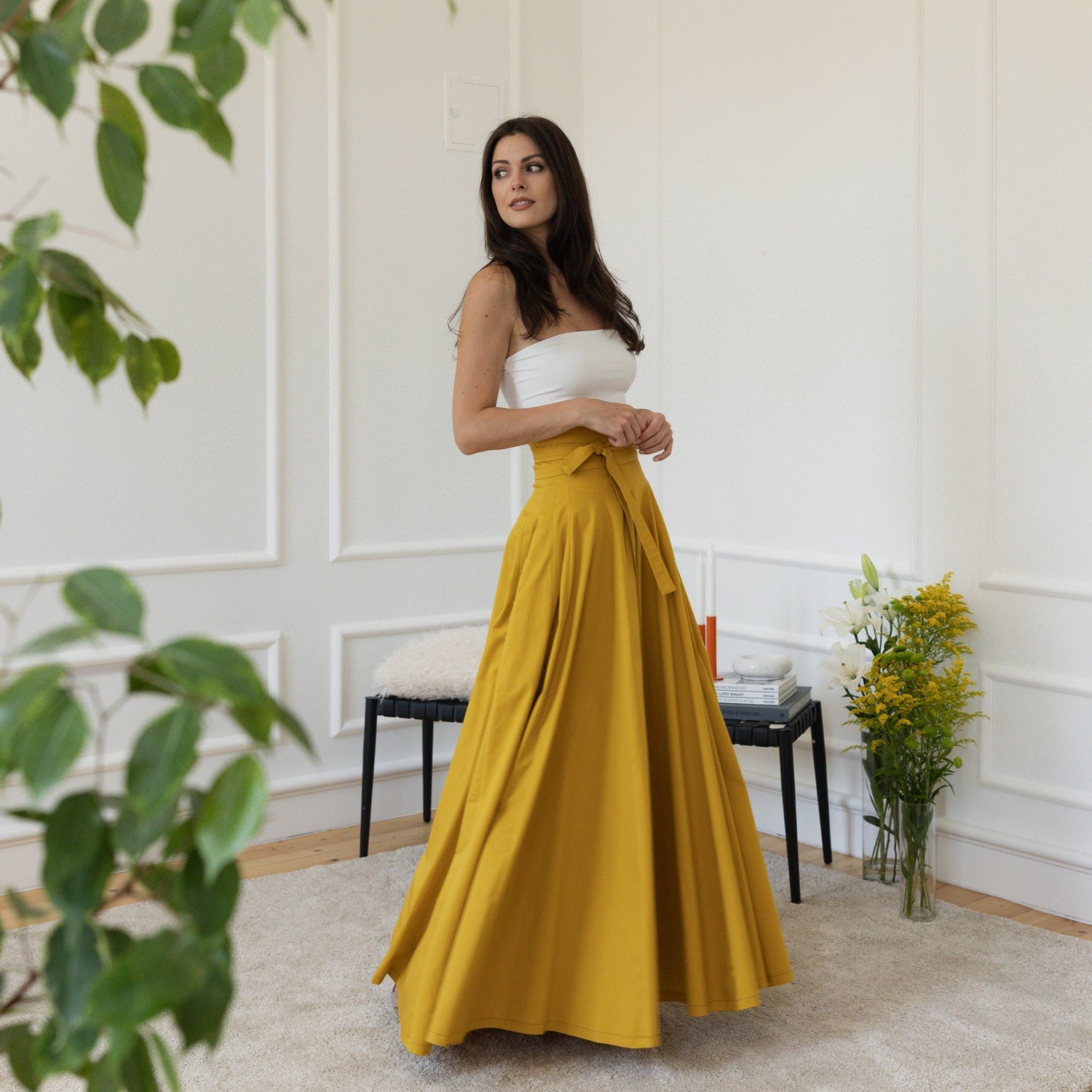
If you are weighing a cotton vs linen skirt for the months ahead, here is the honest truth: neither is the "better" fabric in the abstract. Both are natural fibres, both breathe far better than synthetics, and at NikkaPlace both are cut and sewn by hand in our Bulgarian atelier. The right answer depends entirely on how you actually live in a skirt.
This guide walks through the real differences: feel, drape, breathability, care, and the silhouettes each fabric flatters. By the end, you can pick with confidence rather than guesswork.
The short answer: when to choose cotton, when to choose linen
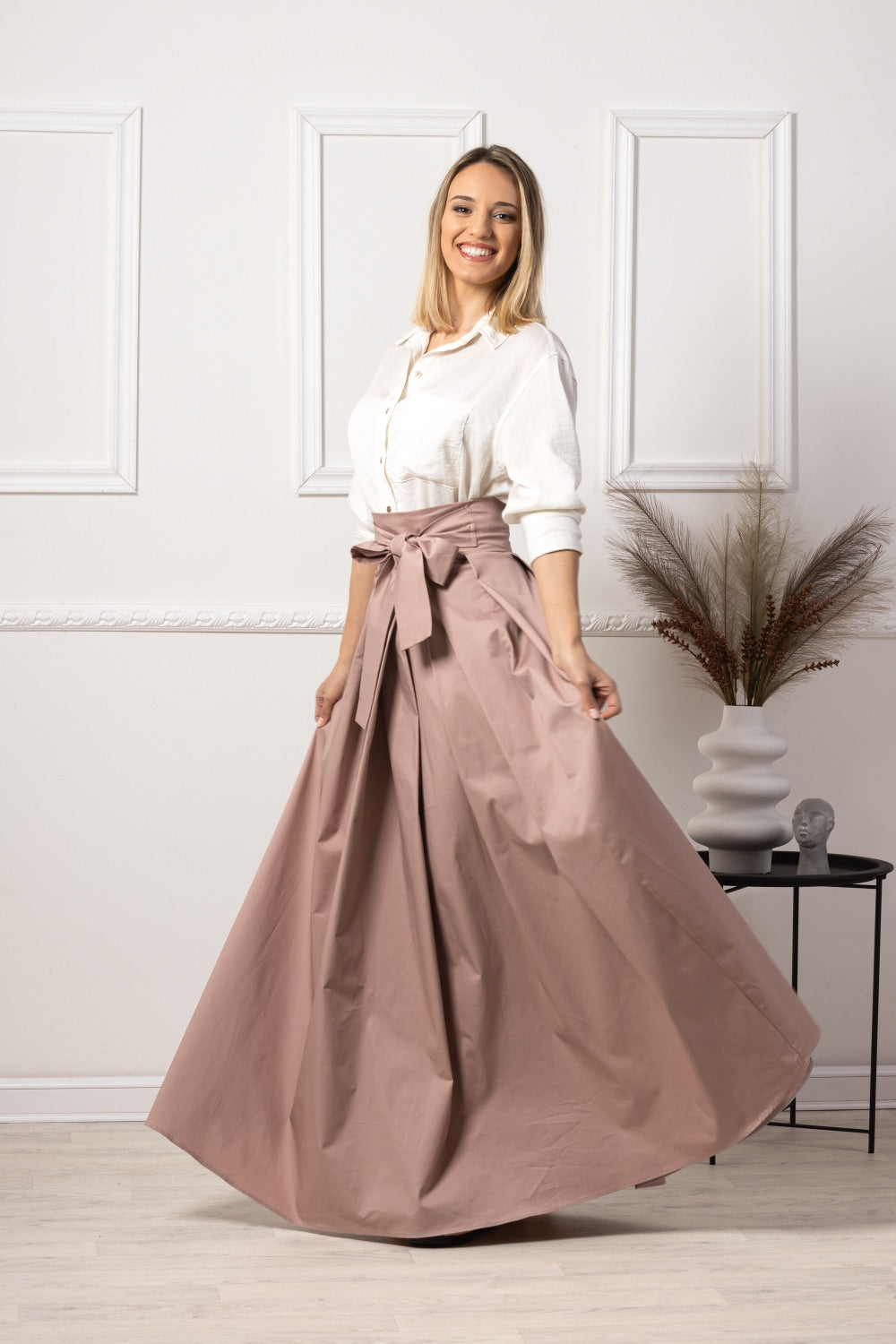
Reach for cotton when your skirt needs to look composed in settings where wrinkles read as careless: an office, a meeting, a structured daytime event. Cotton presses crisp, takes pleats beautifully, and a skirt like the Dusty Rose High Waist Pleated Maxi Skirt keeps its sharp vertical folds from morning coffee to evening.

Cotton is also the easier first natural-fibre skirt if you are used to synthetics, because it behaves more predictably.
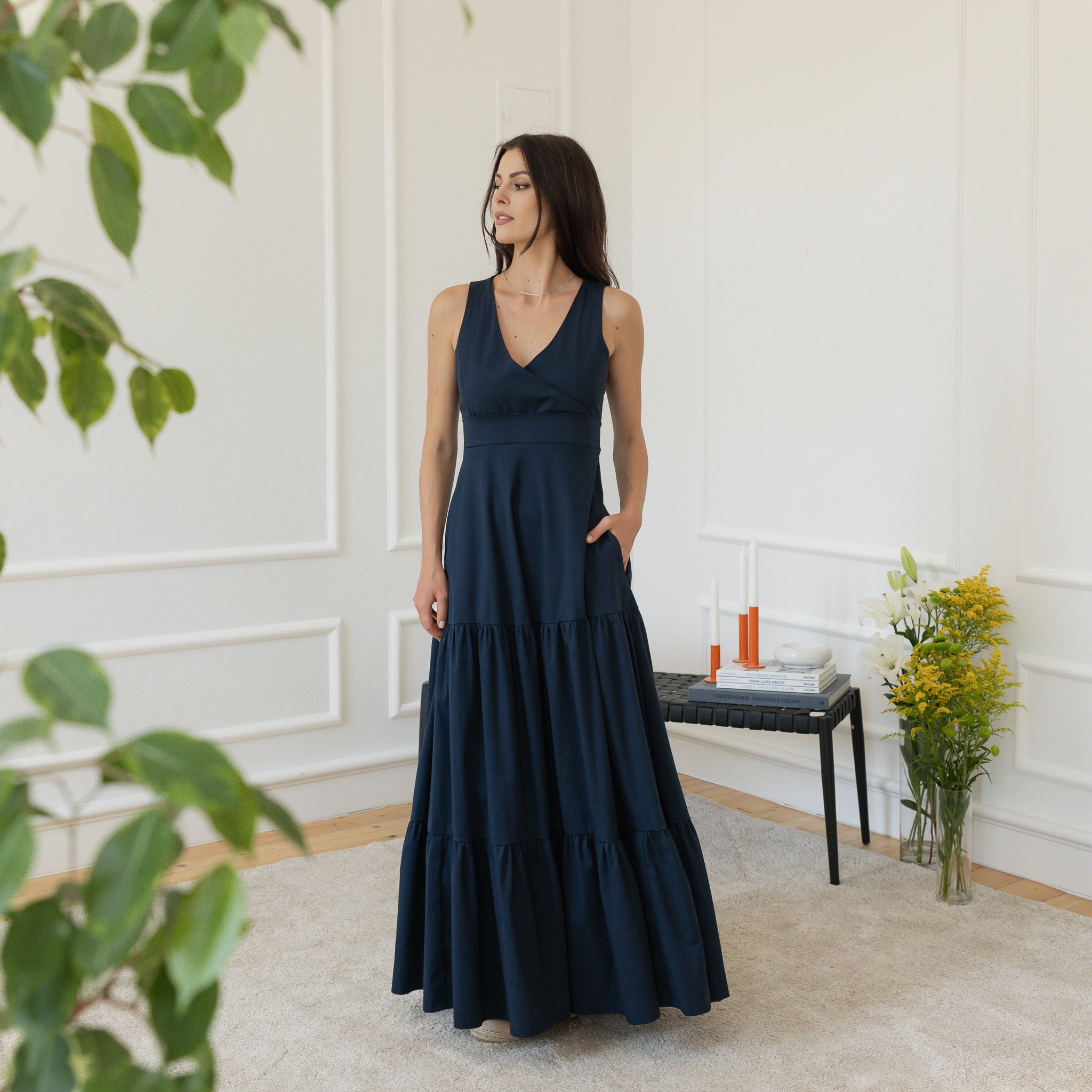
Reach for linen when the day is hot, the setting is relaxed, and you want a skirt that moves and softens with you. Linen carries a gentle crinkle as part of its charm, not a flaw to fight. For a summer holiday, a garden lunch, or a long warm-weather walk, a Dark Blue Linen Wrap Maxi Skirt will feel cooler and lighter than almost anything else in the wardrobe.

Most women who invest in natural fabrics end up owning both, and use them for different parts of their week. That is the sensible outcome, not a cop-out.
What's the difference between a cotton skirt and a linen skirt?
A cotton skirt is made from fibres of the cotton plant: soft, smooth, and slightly stretchy, so it feels gentle against the skin and resists deep creasing. A linen skirt is made from flax fibres: stronger, more breathable, and more textured, with a natural crispness that softens over time. Cotton looks neater; linen feels cooler and wears more relaxed.
That single distinction, flax versus cotton plant, drives almost every practical difference that follows. Linen fibres are longer and more rigid, which is why linen is exceptionally durable and airy but creases readily. Cotton fibres are shorter and softer, which is why cotton drapes smoothly and holds a pressed finish but does not breathe quite as freely. When you read about linen vs cotton fabric anywhere else, this is the root of it.
One thing both share: they are tested, traceable natural fibres rather than petroleum-based synthetics. If certification matters to you, independent standards such as OEKO-TEX verify textiles for harmful substances across both fabric types.
How each fabric drapes — and why it changes the silhouette
This is the part most fabric comparisons skip, and it is the part that actually matters when you are choosing a skirt rather than a bedsheet.
Cotton drapes with weight and control. It falls in smooth, rounded folds and stays where you place it. That makes cotton ideal for pleated and structured shapes: the pleats stay defined, the hemline stays even, and the skirt reads as deliberate. A Fit and Flare Summer Skirt in cotton holds its flare cleanly through the day instead of collapsing against the legs.

Linen drapes with air and movement. It is lighter for its volume, so a linen skirt lifts and sways rather than hanging heavy. A wrap or A-line shape in linen has an easy, slightly undone elegance. Set it beside a structured cotton piece such as the Floor-Length Cotton Skirt in Purple and the difference is immediate: the cotton holds a poised, deliberate line, while linen keeps that loose, breezy movement.

A practical note on body shape, because drape interacts with it. Cotton's structure gives gentle hold over the hip and tummy, which many women find reassuring. Linen's lightness skims rather than clings, so it suits warm weather and a relaxed line but offers less of that sculpted hold. Neither flatters one figure over another; they simply flatter differently.
The same cut in both fabrics: a NikkaPlace test case
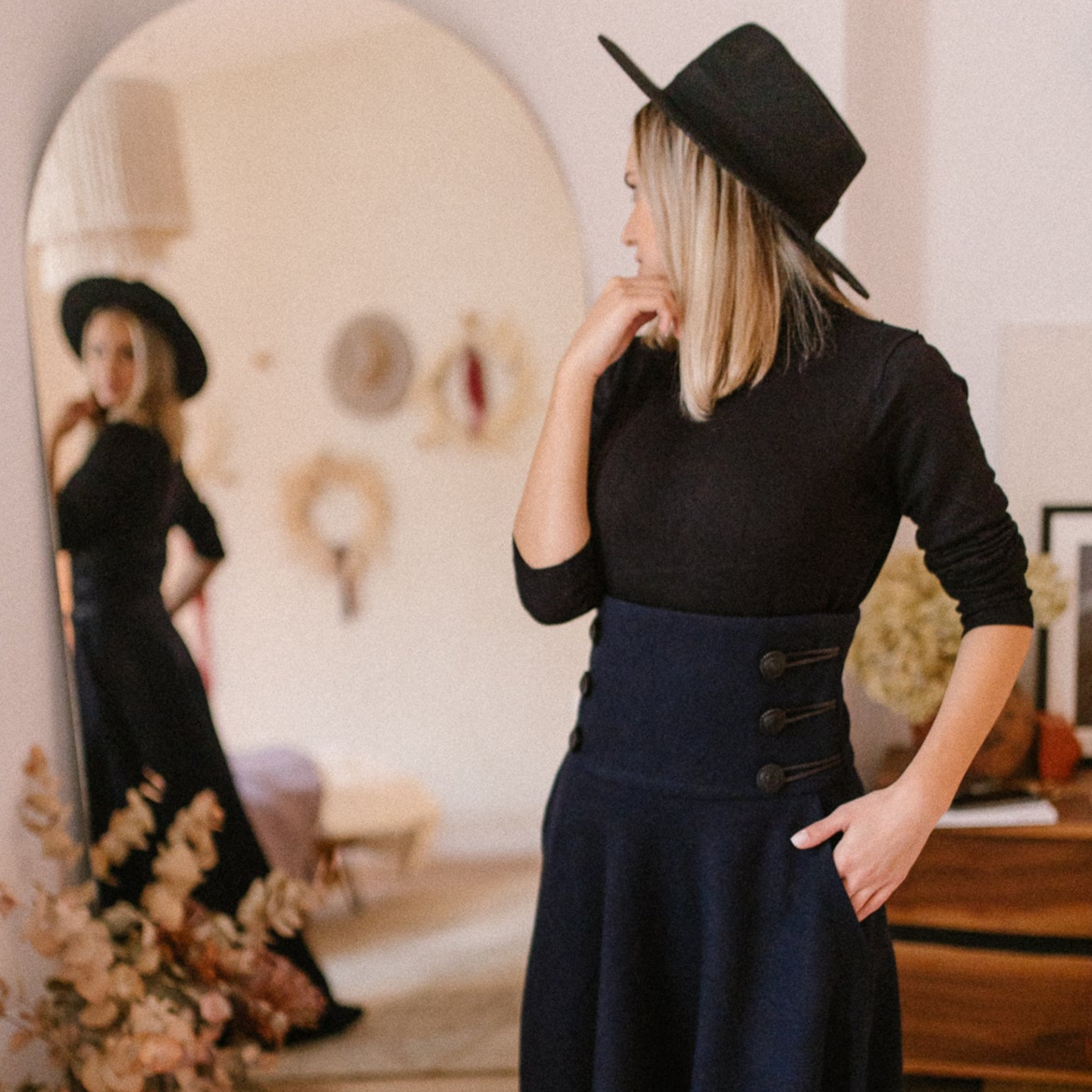
Here is a comparison you can only really make with a maker that offers both. We cut our high-waist Victorian skirt, a full-length A-line silhouette with a fitted waist, in cotton and in linen.
- The Dark Blue High Waist Victorian Skirt in cotton sits with more structure through the waist and a smoother, more formal surface.
- The Linen High Waist Victorian Skirt, sewn from Dutch linen in the identical pattern, feels noticeably airier, with a softer hand and gentle texture.


Same hand-finished seams, same atelier, same A-line, two genuinely different skirts. If you have ever wondered how much the fabric alone changes a garment, this is the cleanest answer we can give.
Which is the more breathable skirt fabric for summer?
For peak heat, linen wins. Flax fibres are hollow and conduct heat away from the body efficiently, and linen's looser weave lets air move freely, so a linen skirt feels cool even at midday. It also absorbs moisture and releases it quickly, which is why linen feels dry rather than clammy on a humid afternoon. If your question is purely "cotton or linen for summer at its hottest", linen is the more breathable skirt fabric.
Cotton is still a genuinely breathable, comfortable summer fabric, far more so than any synthetic. It also has one quiet advantage: it holds a little more warmth, which makes a cotton skirt the more versatile choice across a changeable spring or a cool summer evening. A cotton maxi works from a mild April morning through to a warm July day.
A linen skirt is a specialist in heat; a cotton skirt is a generalist across the whole season.
So the real guidance is not "which is better" but "which season are you dressing for". Hot and humid: linen. Variable, shoulder-season, or air-conditioned indoors: cotton.
Wrinkles, washing and the long game: caring for cotton and linen
Honesty matters here, because care is where the two fabrics differ most in daily life.
Linen wrinkles, and it always will. Creasing is inherent to flax fibre. You can soften it by smoothing the skirt while damp and hanging it to dry, but a linen skirt will carry some crinkle by mid-afternoon. The reframe worth making is this: on linen, that texture looks intentional and lived-in. It is part of why linen reads as effortless. Linen also gets better with age, softening with every wash and, properly cared for, outlasting most things in a wardrobe.
Cotton resists creasing and presses crisp. A cotton skirt holds a smoother finish through the day and irons easily to sharp when you want it. The trade-off is over a long horizon: cotton can lose a little of its initial softness across many wash cycles, where linen keeps improving.
A simple care routine for both:
- Wash cool on a gentle cycle, turned inside out.
- Skip the tumble dryer where you can, and line-dry to protect the fibres and the fit.
- Iron linen while slightly damp for the smoothest result; iron cotton on a medium-hot setting.
- Store folded rather than crowded on a rail, so neither fabric sets a crease where you do not want one.
Treated this way, a well-made natural-fibre skirt is a multi-year piece, not a seasonal one.
Choosing your cotton vs linen skirt: a decision guide by occasion
To make this concrete, here is how the two fabrics map onto a real week:
| Your Situation | The Better Pick | Why |
|---|---|---|
| Office, meetings, structured daytime | Cotton | Presses crisp, holds pleats, wrinkle-resistant through the day. |
| Peak-summer heat and humidity | Linen | Most breathable, coolest, dries fastest. |
| A spring wardrobe that spans cool and warm | Cotton | More versatile across changeable temperatures. |
| Holiday, garden lunch, relaxed weekends | Linen | Light, airy, with easy lived-in elegance. |
| You want low-maintenance, predictable styling | Cotton | Behaves consistently, less ironing pressure. |
| You love texture and a softening-with-age piece | Linen | Gains character and softness over years. |
If you are still torn, think about the single setting where you would wear the skirt most. Dress for that, not for the edge cases. And if your honest answer is "both, for different days", trust it, because that is exactly how a considered wardrobe is built.
Frequently Asked Questions
Is a linen or cotton skirt better for hot weather?
Linen is better for genuine heat. Its hollow flax fibres and looser weave move air and pull moisture away from the skin, so a linen skirt feels cooler and drier at midday. Cotton is still breathable and comfortable in summer, and it holds slightly more warmth, which makes it the more adaptable choice for cooler mornings and evenings.
Do cotton skirts wrinkle less than linen skirts?
Yes. Cotton fibres are shorter and softer, so a cotton skirt resists deep creasing and presses crisp again easily. Linen creases readily, since it is inherent to flax, though that texture tends to look intentional rather than untidy. If a consistently smooth finish through the day matters to you, cotton is the easier fabric.
Which fabric lasts longer, cotton or linen?
Both last for years when cared for well, but linen has the edge on longevity. Flax fibres are exceptionally strong and actually become softer and more pleasant with each wash, so a linen skirt ages gracefully. Cotton is durable too, though it can lose a little of its original softness over many wash cycles.
Are NikkaPlace cotton and linen skirts made the same way?
Yes. Every skirt, in either fabric, is cut and sewn by hand in our atelier in Bulgaria, with the same finished seams and construction standards. Several styles, such as our high-waist Victorian skirt, are offered in both cotton and linen from an identical pattern, so the fabric is the only variable.
Can I wear a linen skirt to the office?
You can, especially in summer. Choose a darker colour and a structured cut, and smooth it while damp so it starts the day crisp. That said, if your workplace leans formal or you dislike visible creasing, a cotton skirt holds a composed line more reliably from morning to evening.
Finding your fabric
The cotton vs linen skirt question has no universal winner, only a right answer for your week, your climate, and the way you like a skirt to move. Cotton gives you structure, polish, and easy versatility; linen gives you air, lightness, and texture that only improves with time.
The most useful next step is simply to handle both, feeling the weight of a cotton pleat against the airiness of linen, and let the fabric tell you which one belongs in your spring. Browse the full cotton skirt edit and the linen skirt collection side by side, or read our complete cotton skirt guide if cotton is where you are leaning. Whichever you choose, you are choosing a skirt made slowly, by hand, to stay with you.