




There is a moment every July when the rest of your wardrobe gives up. Cotton clings, synthetics trap the heat, and you reach for the one thing that still feels like air against your skin. That thing is almost always linen. Learning how to wear linen in summer is less about chasing a trend and more about dressing for the weather you actually live in, with a fabric that has kept people cool for several thousand years.
It is also a fabric that suits a certain way of buying clothes: slowly, with care, choosing pieces that earn their place over many seasons rather than one. That is the whole idea behind a good linen wardrobe.
This is the complete guide. We will cover why linen works in heat, how to style it from a Monday desk to a seaside dinner, how to build a small linen capsule that recombines endlessly, and how to wash it so it softens instead of wearing out. Browse the linen edit as you read, or keep going and let the right pieces find you.
Why linen is the fabric summer was made for
Linen is spun from the flax plant, and the fibre has a structure that does something cotton and polyester cannot. It is hollow and slightly irregular, so it holds its shape away from the body instead of sticking to it. That tiny gap between cloth and skin is where the cooling happens. Air moves through it, heat moves out, and you stay comfortable for longer.
The same structure makes linen strong. A well-made linen dress outlives most things in a summer wardrobe, growing softer with every wash rather than thinner. Flax fibres are some of the longest and most durable in natural textiles, which is why antique linen sheets still turn up in good condition generations later. The cloth was built to last from the very start.
At NikkaPlace every linen piece is cut and sewn by hand in our Bulgarian atelier from Dutch linen, a heavier, denser weave than the loose gauze you find on a fast-fashion rail. That density is deliberate. It is the difference between a dress that lasts one season and one that lasts ten, between a hem that holds its line and one that goes limp by August. When something is made by real hands rather than rushed through a machine, the care shows in how it ages.
Linen also has a look that reads as considered without trying. The soft creases are not a flaw to iron away; they are the fabric telling you it is real. A linen dress carries a quiet kind of polish, the sort that does not announce itself but holds up in any room. Once you stop fighting the rumple, linen summer outfits become the easiest thing you own, and the most reliable.
There is a sustainability story here too, though it is worth telling plainly rather than preaching it. Flax needs far less water than cotton to grow, the plant uses nearly all of itself with little waste, and a garment you keep for ten years is the greenest one in any wardrobe. Buying less and buying better is the point. Linen happens to make that easy.
Is linen good for hot weather?
Yes. Linen is one of the best fabrics for hot weather because it is highly breathable, wicks moisture away from the skin, and dries quickly. The flax fibre conducts heat away from the body and lets air circulate, so you feel cooler than you would in cotton or synthetics. It also absorbs moisture without feeling damp, which keeps you comfortable on the hottest days.
If you have ever wondered is linen breathable compared to a plain cotton tee, the short answer is that linen breathes more freely and recovers faster after it gets wet. Cotton holds water against the skin and stays heavy; linen releases it and dries in the breeze. That single difference is why linen has been the go-to summer cloth across hot climates for centuries, long before anyone printed a fabric label.
It works hardest exactly when you need it most: high heat, full sun, long days. A linen maxi on a 35°C afternoon does something a synthetic dress simply cannot, which is let you forget what you are wearing.
How to style linen dresses by occasion
A linen dress is the most flexible piece you can own in summer, because the same silhouette shifts register with nothing more than a change of shoes and one accessory. Knowing how to style linen by occasion is the difference between owning one dress and owning four outfits. Here is how to move a single fabric through a whole week.

For work, reach for structure. The Midi Linen Belted Dress has a defined waist and an under-the-knee A-line that holds a professional line even at the end of a hot afternoon. Add flat leather sandals or a low mule, a slim watch, and a structured tote. The belt does the tailoring for you, so the linen reads as intentional rather than off-duty. In a warm office it beats a synthetic shift dress on every count.
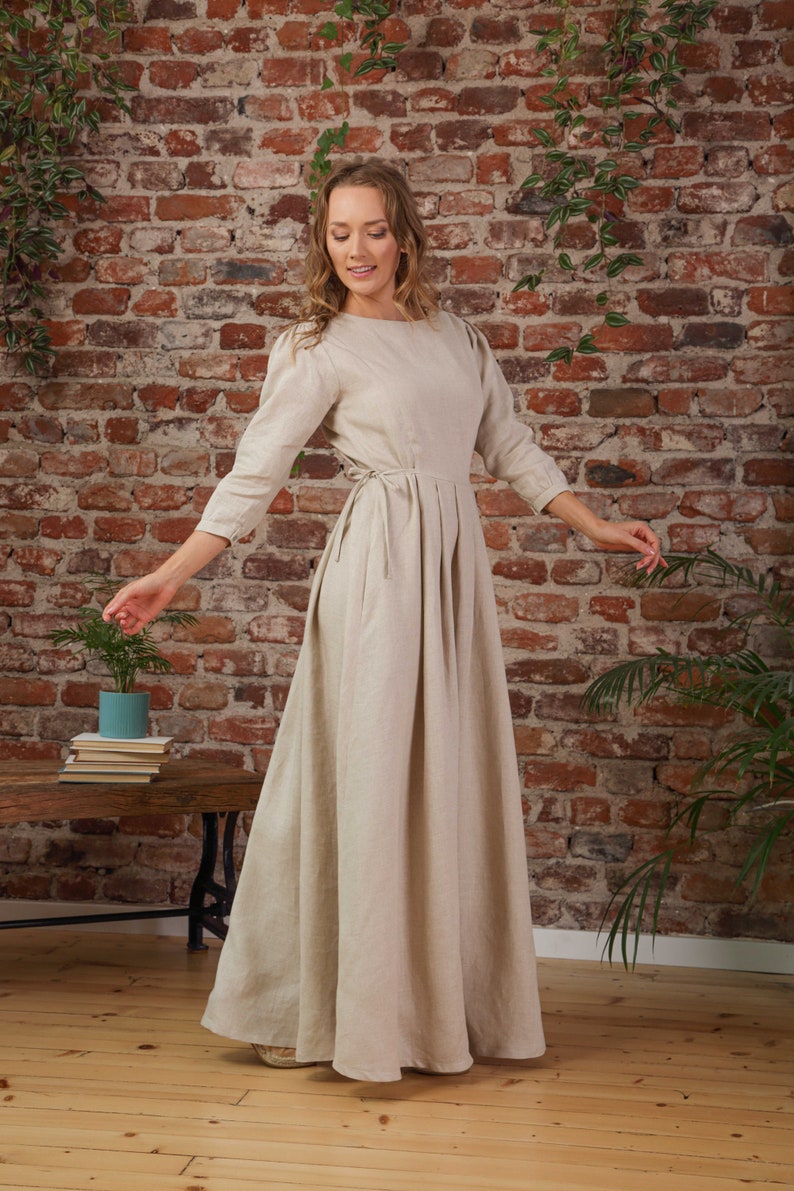
For the weekend, let it relax. A long-sleeve linen maxi in a natural tone works with bare feet at home and woven flats out, sleeves pushed up, hair loose. The long sleeve is not a contradiction in summer; light linen covers the shoulders from the sun while still breathing. It is the kind of dress you put on once in the morning and forget about until the light goes down.

For evening, lengthen and sharpen. The Linen Maxi Belted Dress with its buckle belt and collar takes a heeled sandal and a single gold earring without any fuss. For a holiday dinner, leave the belt loose and let the fabric drape; for something more formal, cinch it and add a clutch. Linen at night looks expensive precisely because it is unexpected. Most people default to silk or satin, so a beautifully cut linen maxi stands out.
For a holiday, pack the one that does everything. A relaxed maxi rolls small, shrugs off a suitcase, and goes from beach to terrace dinner with a swap of sandals. This is where linen's wrinkle-friendliness becomes a feature, not a flaw. You stop worrying about creasing and simply wear the dress.
When you want the whole range in one place, Shop linen dresses from the linen dress edit and build outward from whichever silhouette suits you best.
Building a linen capsule: skirts, trousers and layers
A dress answers most summer days, but a small capsule of separates is what gets you through a fortnight without repeating yourself. The trick is to keep the palette quiet so everything mixes, then let texture and silhouette do the talking. You do not need many pieces. You need the right few. Start with three anchors.

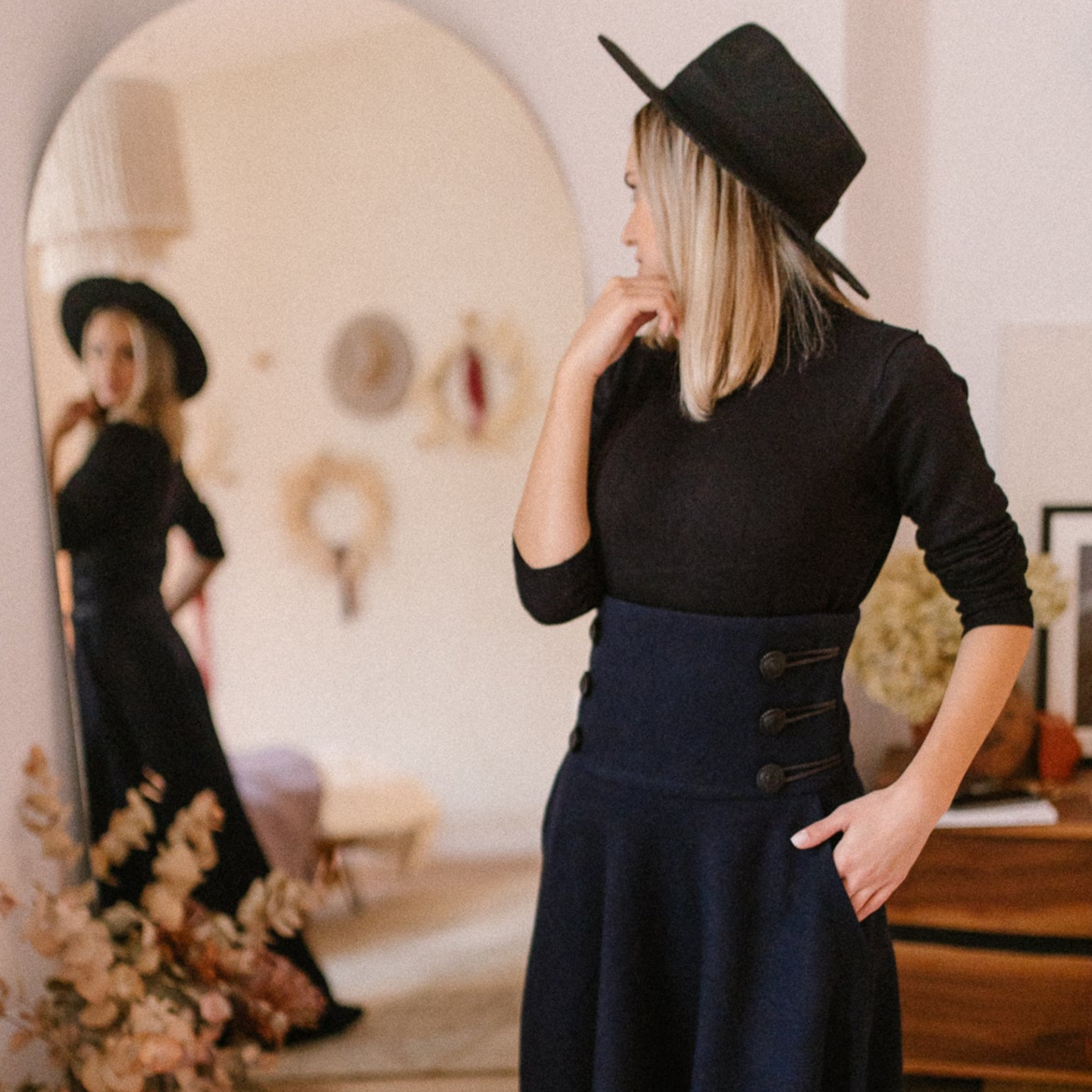
First, a trouser that does the work of three. The Dark Blue Wide Leg Linen Pants sit high on the waist with a palazzo leg and a soft bow detail, so they dress up under a silk camisole and down with a plain tee. Wide-leg linen keeps air moving where cotton trousers would cling, and the high rise lengthens the line whether you tuck or leave a top loose. A dark trouser also grounds a summer palette that can otherwise drift too pale.

Second, a skirt with movement. The High Waist Linen Maxi Skirt flares and drapes, with side pockets that make it as practical as it is pretty. Tuck a fitted top in for shape, or leave an oversized one out for ease. A maxi skirt is quietly the coolest thing you can wear in real heat, since nothing touches the legs and the air runs straight up through the cloth. You will find more options among our linen skirts when you want to widen the palette.

Third, a layer that earns its place. The Oversized Linen Tunic goes over the trousers, knots at the hip over the skirt, or stands alone over swimwear on a beach day. A good tunic is the connective tissue of a capsule, the piece that makes two outfits feel like five. Three anchors and a couple of fitted tops, and already you have a week of outfits without trying.
A working linen capsule looks something like this:
- One maxi dress for the days you want to decide nothing
- One belted midi that crosses from work to dinner
- One pair of wide-leg trousers
- One maxi skirt with pockets
- One oversized tunic that layers over everything
- A fitted top or two in a tone that disappears into the rest
Keep the colours within one family, mostly naturals with a single deeper anchor, and every piece will talk to every other piece. That is the quiet magic of a capsule: fewer decisions, more outfits, nothing stranded at the back of the wardrobe.
Caring for linen so it lasts
Linen care is genuinely simple, and getting it right is the difference between a dress that softens beautifully over years and one that feels stiff and unloved. A few honest rules cover almost everything.
On softening: new linen, especially a denser Dutch weave, starts a little crisp. It softens with wear and washing, not with force. Three or four washes in, the hand of the fabric changes completely, and it never goes back to that first stiffness. This is why good linen is an investment that improves rather than declines. Resist the urge to judge a piece by how it feels on day one.
On the wrinkle truth: linen creases. That is the fabric, not a failure, and no amount of pressing will keep it perfectly smooth through a day of wear. If you want it tidier, hang it damp and let gravity pull most of the creasing out, then press lightly with steam on the reverse. If you want it relaxed, simply wear it as is. Both are correct, and the second is more honest to what linen actually is.
On washing and storing: machine wash cool on a gentle cycle, skip the fabric softener, which coats the fibre and dulls its breathability, and either line-dry or tumble on low and remove the piece while still slightly damp. Store linen folded or loosely hung. It does not need a crowded wardrobe pressing it flat, and it likes a little air around it even in storage.
Treated this way, a linen dress is not a one-summer purchase. It is a piece you will still be reaching for several summers from now, by which point it will feel better than the day it arrived.
How do you choose linen for your shape and life stage?
The best linen piece is the one that suits how you are built and where you are in life, not the one a chart tells you to buy. Linen's forgiving drape makes this easier than most fabrics, because it skims the body rather than gripping it, and a skimming fabric flatters far more shapes than a clinging one ever will.

If you prefer a clean line over the waist, a loose linen maxi in a trapeze cut falls straight from the shoulder and moves with you. If you like definition, a belted style gives you a waist on your own terms, with the belt placed exactly where you want it. Petite frames often like a midi length that shows the ankle and keeps the proportions from overwhelming; taller frames can carry the full maxi with ease and rarely need to think about hem length at all.

Linen also serves the life stages other fabrics handle badly. The Sleeveless Maxi Maternity Linen Dress in White gives a growing bump room without losing its shape, and it stays cool through a summer pregnancy when almost nothing else does. The same forgiving drape that flatters one body flatters another at a different moment, which is part of why a linen dress so often outlasts the season you bought it for. Bodies change; good linen keeps up.
Frequently asked questions
Is linen good for hot weather?
Yes. Linen is among the most breathable summer fabrics. Its hollow flax fibre lets air circulate and wicks moisture away from the skin, so it feels cooler than cotton and dries faster after washing or sweat. It is the reason linen has been worn in hot climates for thousands of years, well before modern performance fabrics existed.
Does linen wrinkle, and can I stop it?
Linen creases naturally, and that soft rumple is part of its character rather than a defect. You can minimise it by hanging garments damp and steaming lightly on the reverse, but you cannot remove it entirely. Most linen wearers simply learn to love the lived-in look and stop pressing for perfection.
How do I wash linen without ruining it?
Machine wash cool on a gentle cycle, skip the fabric softener, and line-dry or tumble on low. Remove the piece while slightly damp to keep any creasing soft and easy to settle. Washing actually improves good linen, making it softer with each cycle rather than wearing it thin, so regular washing is nothing to fear.
Is linen worth the higher price?
For a well-made piece, yes. Quality linen lasts many summers, softens with age, and resists the pilling and stretching that ends a cheap dress in a single season. Bought once and cared for simply, it costs less per wear than the fast-fashion pieces you replace every year. The value is in the longevity.
What should I look for in a quality linen dress?
Look for a denser weave that holds its shape, even stitching at the seams and hem, and a fibre that feels substantial rather than papery and thin. NikkaPlace pieces are sewn by hand from Dutch linen, a heavier weave chosen for longevity over the loose gauze common in fast fashion. Weight and construction are what separate a keeper from a throwaway.
Start your linen summer
Linen rewards the person who keeps it simple: a few honest pieces, washed with care, worn until they feel like a second skin. Build slowly, let the creases be, and you will reach for the same dress three summers from now and find it better than the day you bought it. Explore the full linen collection, pieces made by hand to last well beyond one summer.


